St Laurence Church, Winslow, Buckinghamshire - Monuments

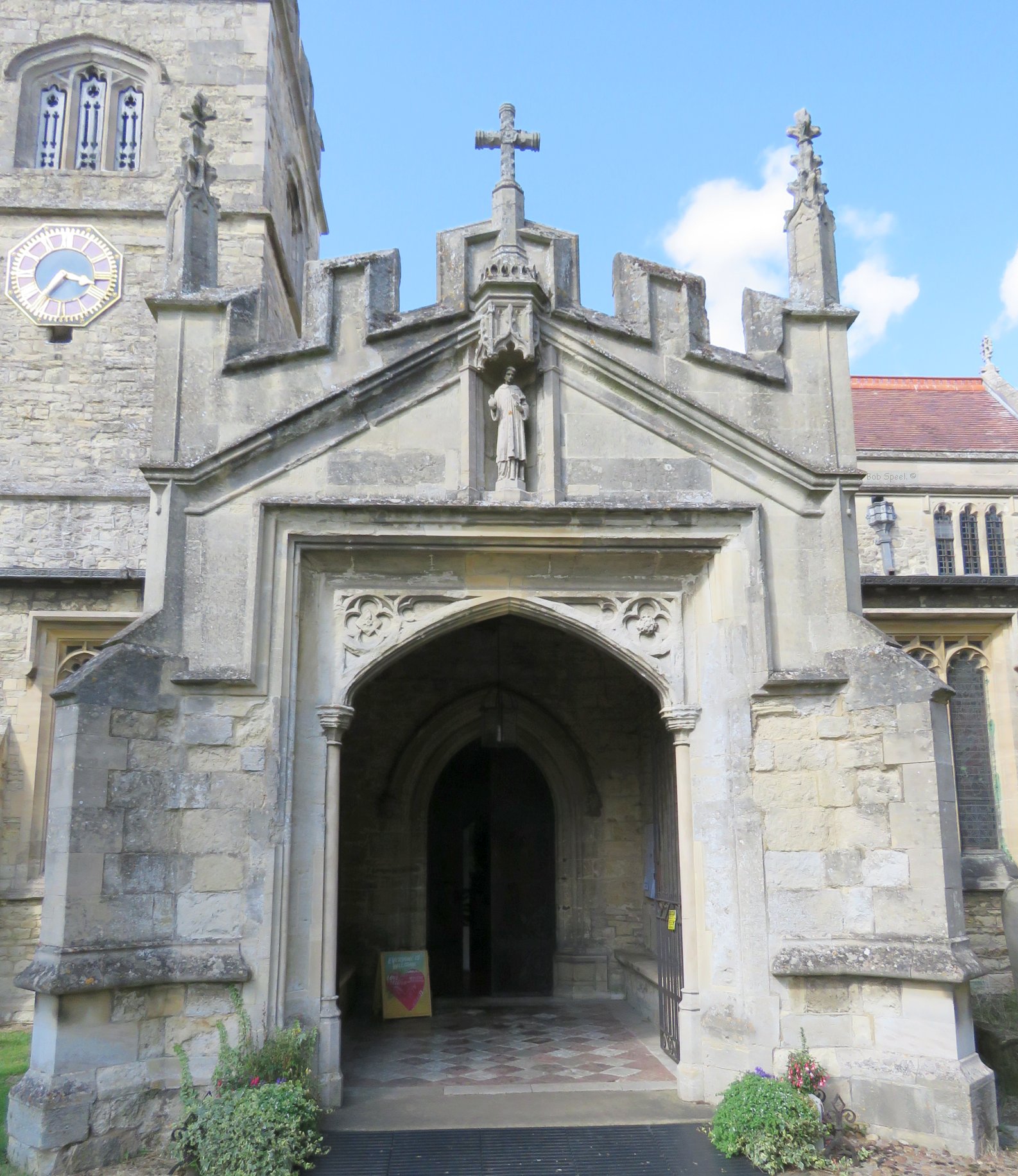


St Laurence, Winslow Parish Church, is a largely medieval building with a good exterior and interior ambience; it contains half a dozen wall panel monuments.
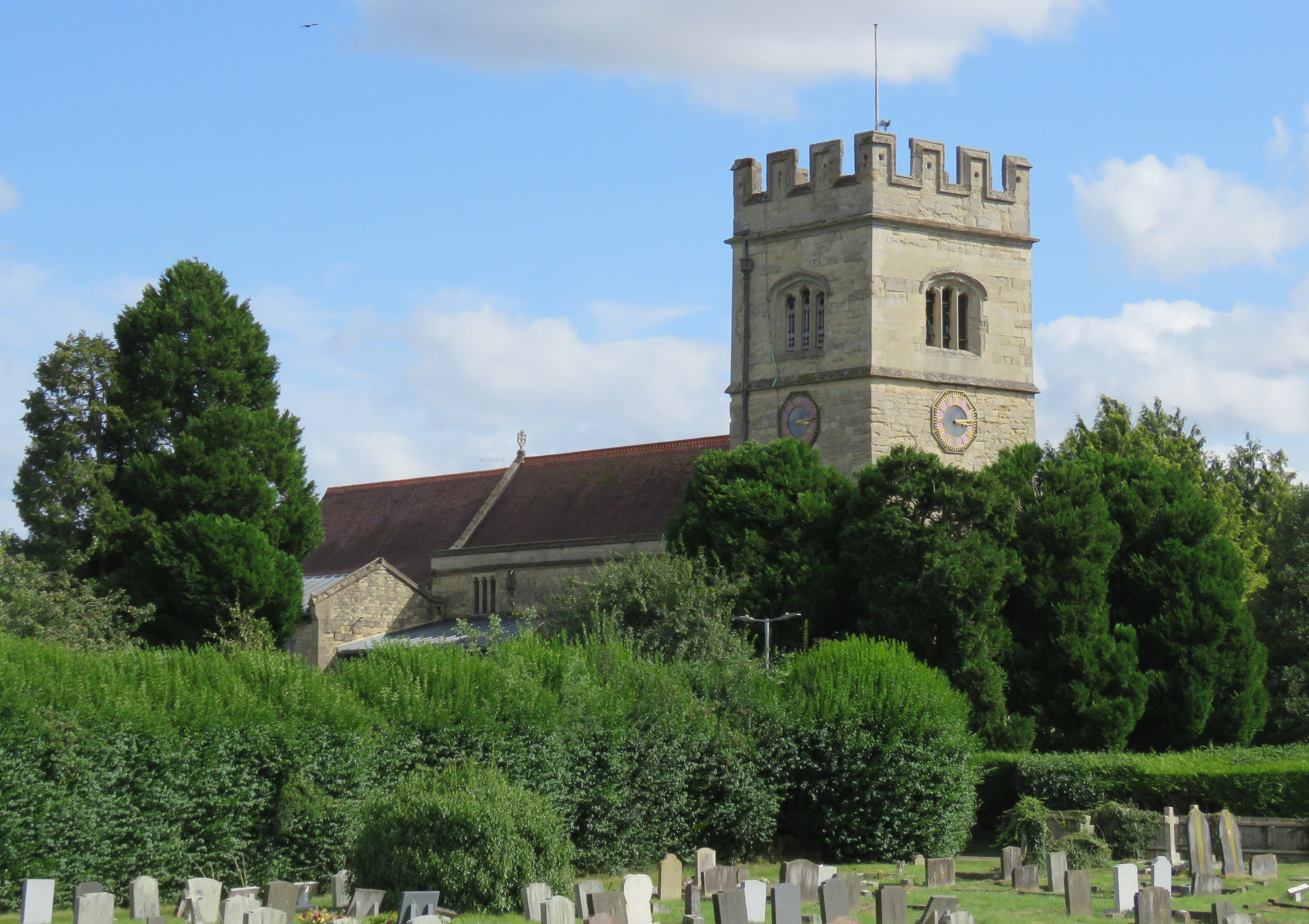
The distinctive exterior features of St Laurence, Winslow, are the tower and the south porch, both with really rather chunky battlements, and, seen from the west, tower end, that the aisles extend all the way to either side of that tower. All in pale stone, with pitched tile roofs. The body of the Church is largely 13 th and 14th Century, as can be seen in some of the nave windows, though the style as seen from the front, road side is all Perpendicular 15th Century, and the uppermost stage of the tower of similar date.
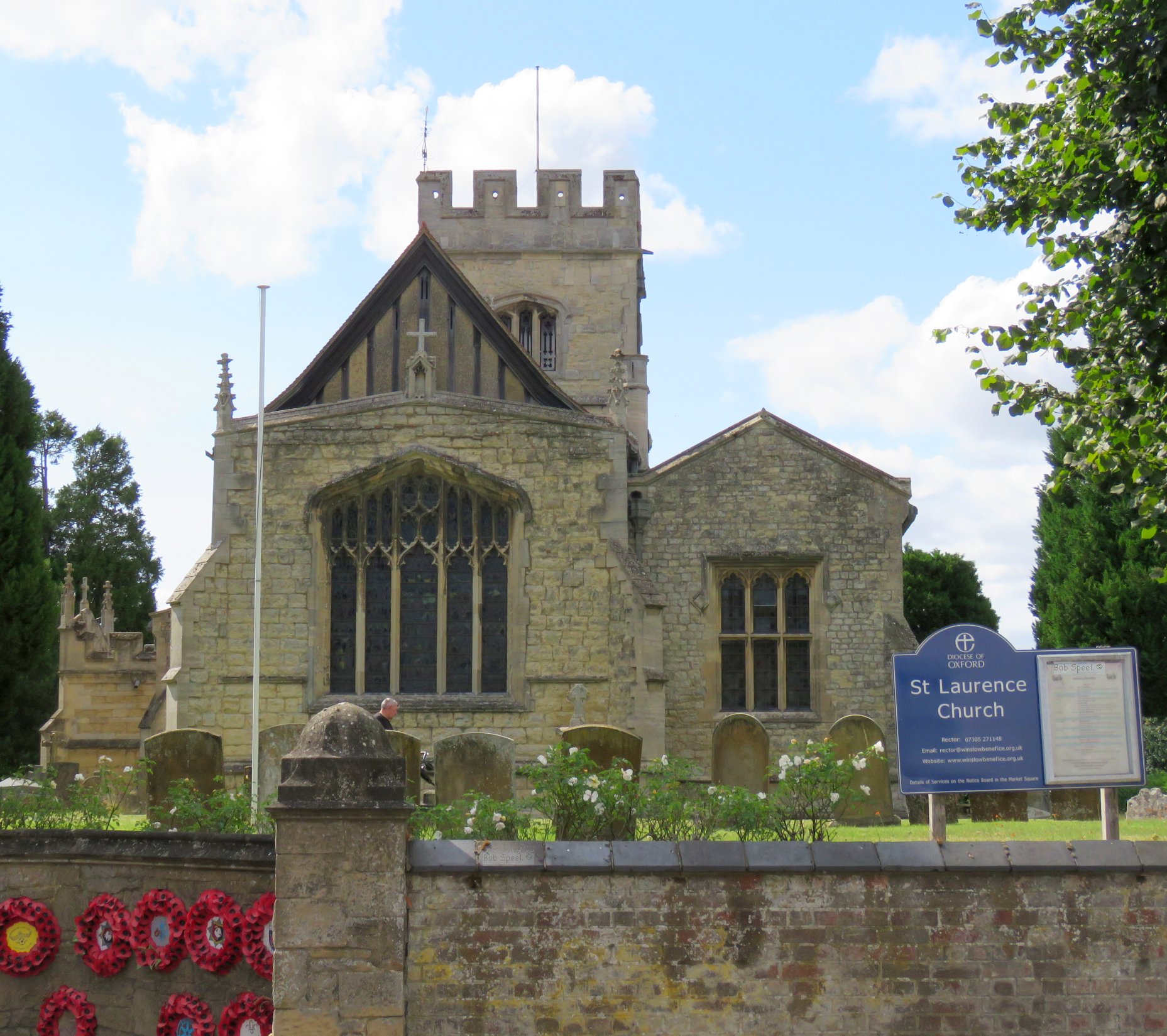
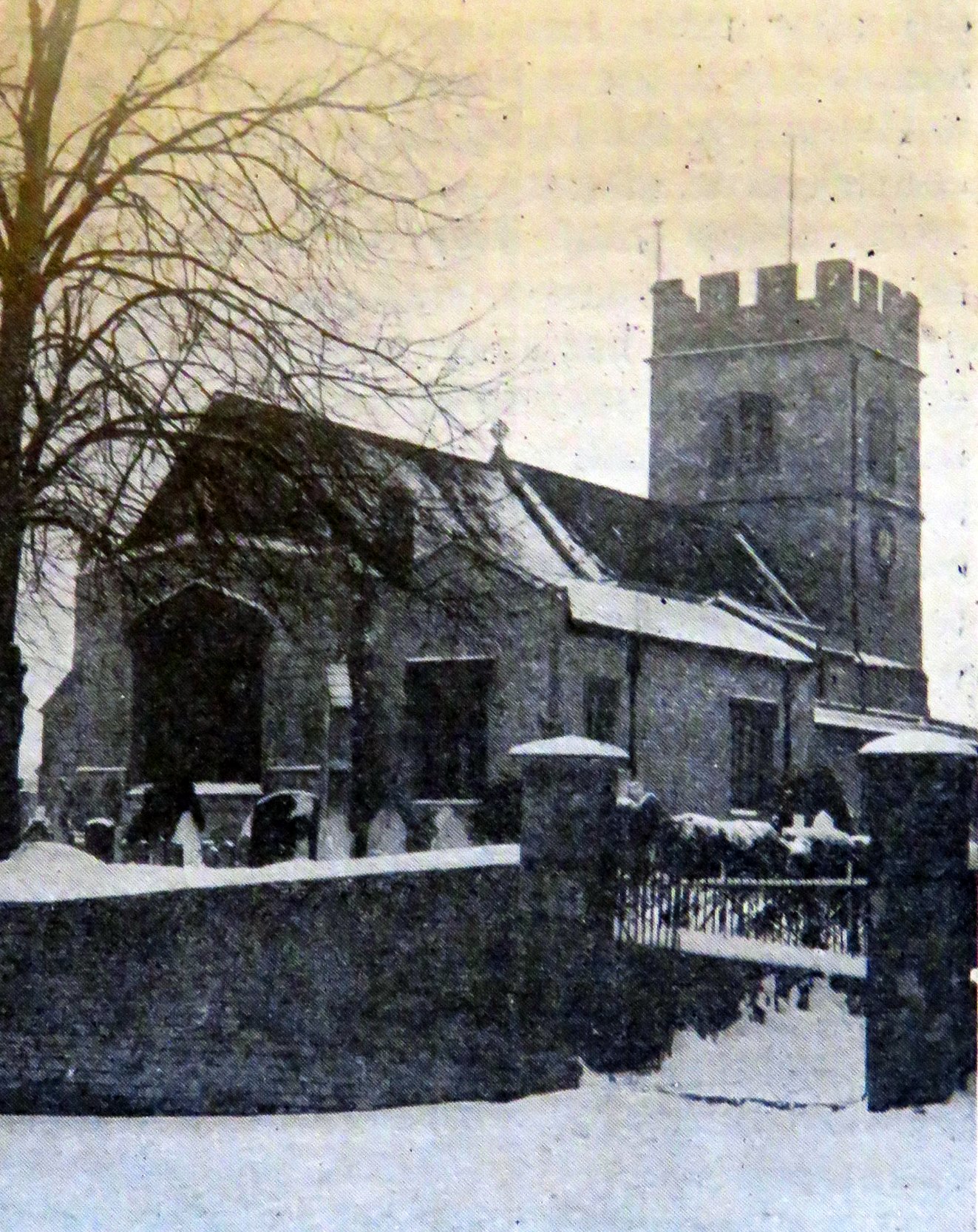
St Laurence, Winslow, now and a century ago.
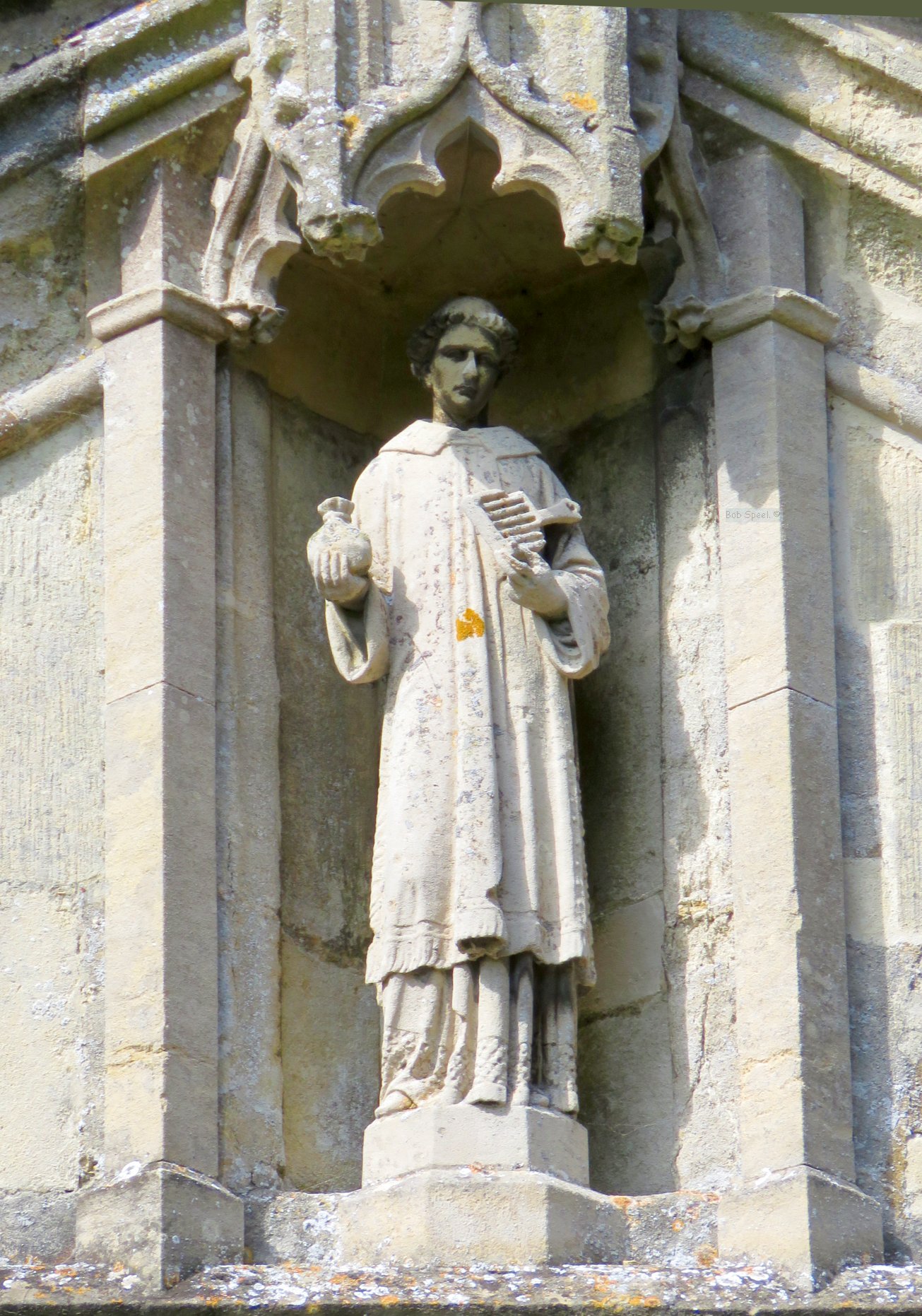
The South Porch is worth a closer look; it has its own buttresses, rising to pinnacles at the corner, and above the doorway is a little statue of Saint Laurence (see picture at top of page). He holds a gridiron in one hand (which is how he was martyred, roasted alive), and a moneybag in his other, recalling his almsgiving in Rome. His costume has rather wide sleeves, and is called a dalmatic, being the garb of a deacon, which was St Laurence's status. While the porch itself is 15th Century, this statue is clearly Victorian, and in fact by Harry Hems, a notable carver of ecclesiastical architectural statues.
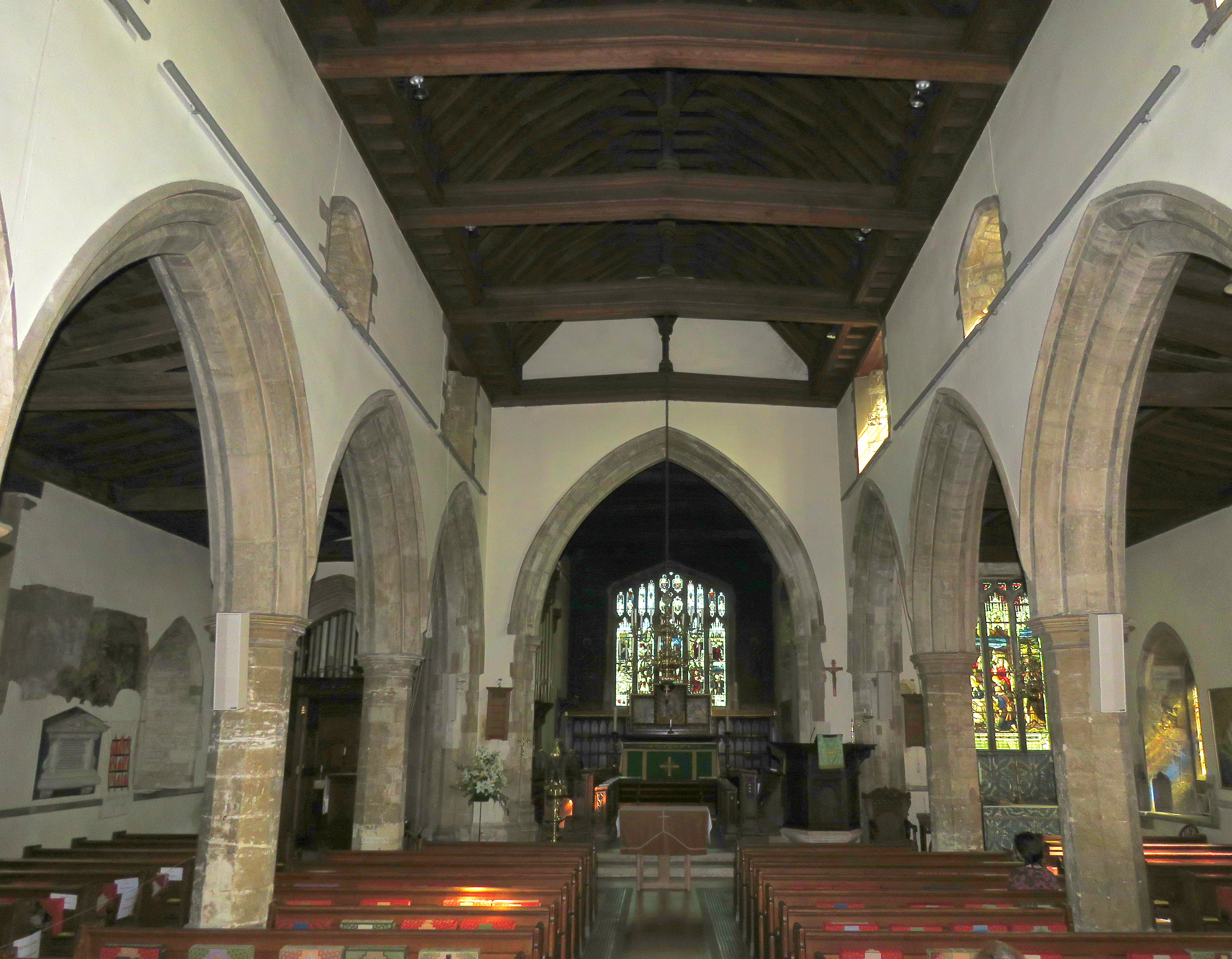
The Church has an evocative, medieval interior, dark and filled with ambience. Stone pillared Gothic arches divide off the nave form the tall aisles - the columns of these were recut in later medieval times from the thicker originals - the stained glass windows give a jewelled effect, and the open beamed roofs are a further feature. I think it is this look and feel which attracts the visitor, rather than the small collection of monumental panels which this website is focused on. As is generally the case, the Church was worked upon and enlarged and altered many times, especially in the 13th-15th Century, and with a full refurbishment in the 1880s, by John Oldrid Scott, a church architect who was the son of the eminent Victorian architect Gilbert Scott. Detailed architectural surveys identify that the nave itself dates to the 12th Century - the walls above the arches are the oldest surviving elements, which is typical, because enlargement generally takes place to lengthen nave and chancel, so replacing the east end and the west, and aisles thrown out to the sides demolish the lower side walls to the nave. Anyway, that 12th Century core may itself be a replacement for a far earlier church, for Winslow parish has an ancient pedigree going back to when King Offa, he of the dyke, founded St Albans Monastery, and gave to it Winslow in the year 794, in whose possession it remained to be recorded in the Doomsday Book. Anyway, to our monuments.
Monuments
Half a dozen monochrome panels hang on the wall of the Church, mostly of the white-on-black style which was particularly prevalent a generation previous to the earliest tablet here:
The Revd. Thomas Henry Walpole, d.1840, Vicar of the Parish, and his daughter Amelia Walpole, d.1846, aged just 17, and added later, his wife Sarah Walpole, .d.1878. An obelisk monument (see this page). A finely carved urn with leafy surround and a harmonious drape is in front of the grey, streaky marble obelsk. Below a central shelf is the inscription on a block of white marble; small carved stone supports below. Quite a grand piece. By the statuary John Alcott of Coventry.
Mary Preedy and James Preedy, undated small plain white panel resting on two supports.
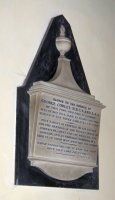
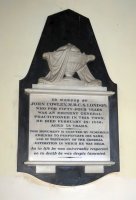
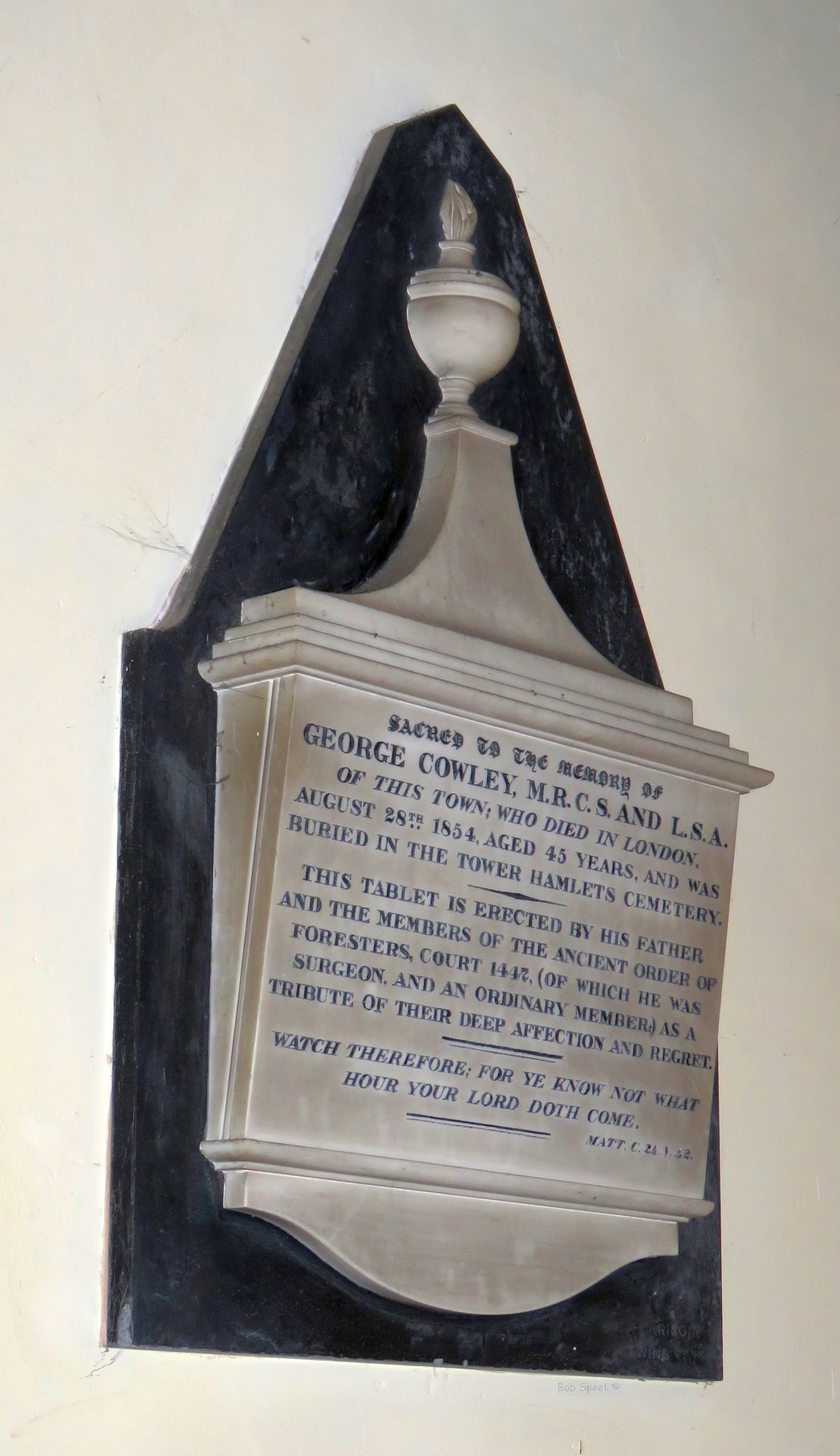
Cowley monuments, by Harrison of Winslow.
George Cowley, d.1854, erected by his father and 'the members of the ancient order of Foresters, Court 1447 (of which he was surgeon and an ordinary member)'. The black backing cut to a short obelisk, with a simple carving of a small flaming urn in front of it, on a curved support spreading out to steps above the inscription. Curvy apron below. Signed by the local mason, Harrison of Winslow.
John Cowley, d.1856, 'for 54 years an eminent general practitioner in this town'. A short white-on-black obelisk monument. The obelisk is cut to shape along with the whole surround the inscribed panel, with a shelf on top bearing a draped pot. Again by the mason Harrison.
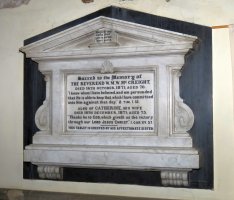
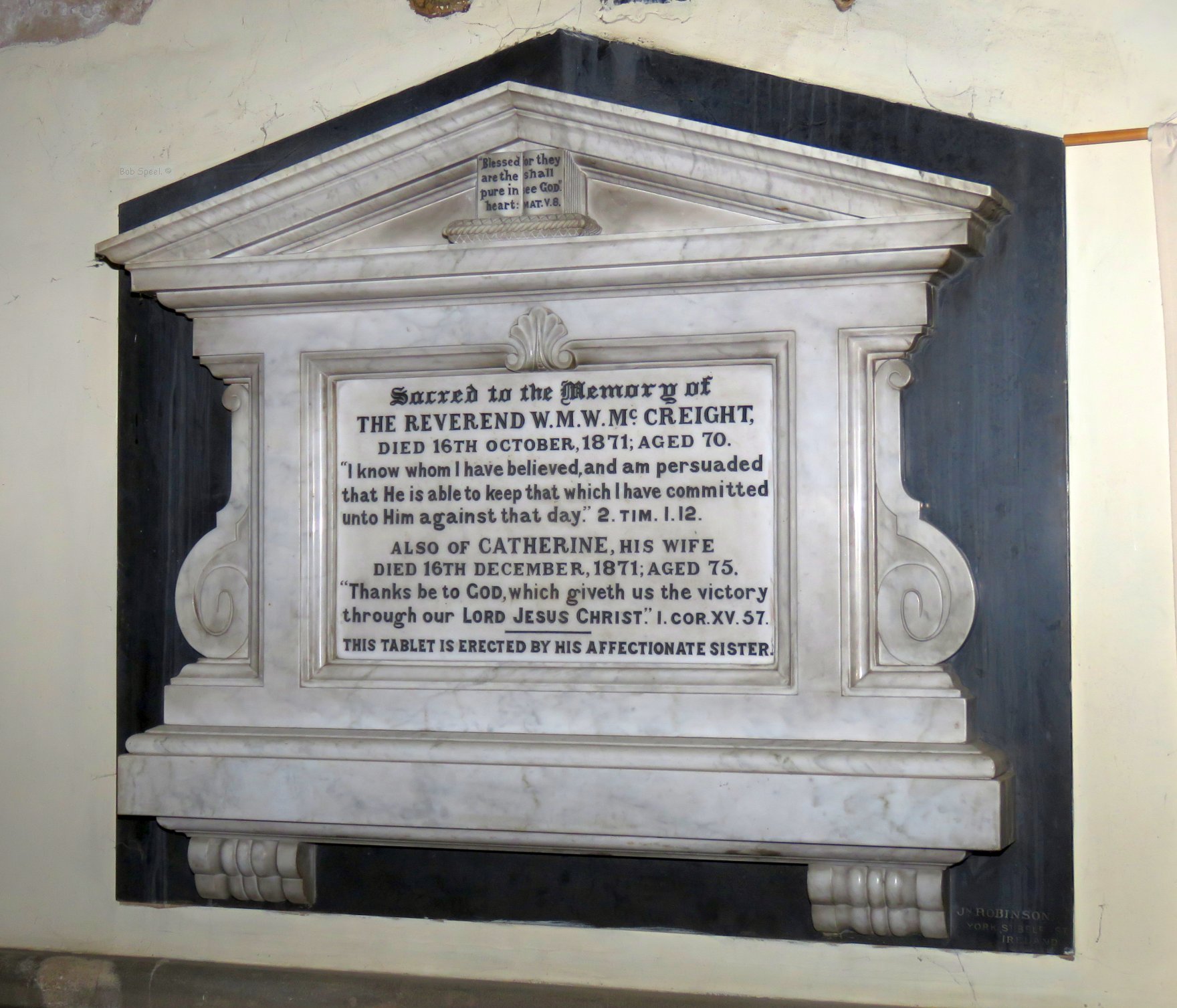
Revd. McCreight, panel by Belfast stonemason John Robinson.
The Revd. W.M.W. McCreight, d.1871, and his wife Catherine McCreight, d.1871, erected by his sister. He was Vicar at the Church from 1841-63. A chunky mid Victorian piece, with free style pediment seated directly above the framed inscription, curly scrolly side pieces loosely derived from 18th Century monuments, blocky lower shelf and carved supports. A small open Bible with motto rests within the pediment. On a shaped black backing singed by the stonemason, John Robinson of York Street, Belfast. The name McCreight is of Scottish and Irish descent, and likely the sister went to a familiar monumental mason back home in Belfast rather than trust the monument to Mr Harrison or other locals.
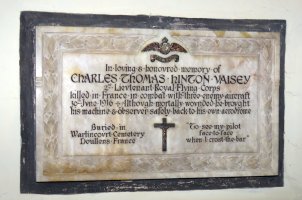
Panel to Lt. Vaisey.
Lt. Charles Thomas Hinton Vaisey, d.1916, 2nd Lieutenant Royal Flyin Corps, noting his valliant death. A good Arts and Crafts panel, with elegant writing, coppery regimental arms and a crucifix, and a carved leafy border. Good of its type.

Revd. Walpole and family, obelisk monument.


Also in the Church:
Patches of wall painting, quite large but much battered, with saintly figures just about discernable, to the north side (picture below left). They are apparently the Virgin in judgment, St Christopher carrying the infant Christ (central) and the Death of St Thomas a Becket, though I struggled to convince myself that I could really identify any of them even after reading the sign.
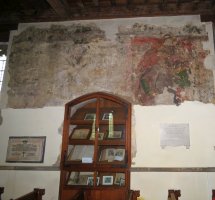
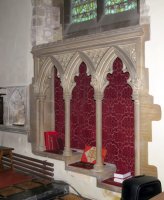
A nice sedilia, three arches, finely and delicately carved with cusping (picture above right).
The 14th Century font, octagonal, pale stone on a thick central shaft, with a note on the wall nearby that it was restored in 1938 in memory of Norman McCorquodale. Note too the encaustic patterned tiling around the font, presumably from the 1880s refurb.
I did not get to see the brass to Thomas Figge, and his wife Jane, dated 1578, apparently with 'effigies of a man and a woman in gowns, with two male children and five females beneath'
A diamond shaped stone to Edward Baswell, d.1689, who by tradition was King of the Gypsies.
Various pieces of ecclesiastical furniture - wooden sided Jacobean pulpit raised on a stone base, with minor carving; ancient chairs, with more carving, and various things again from the 1880s restoration
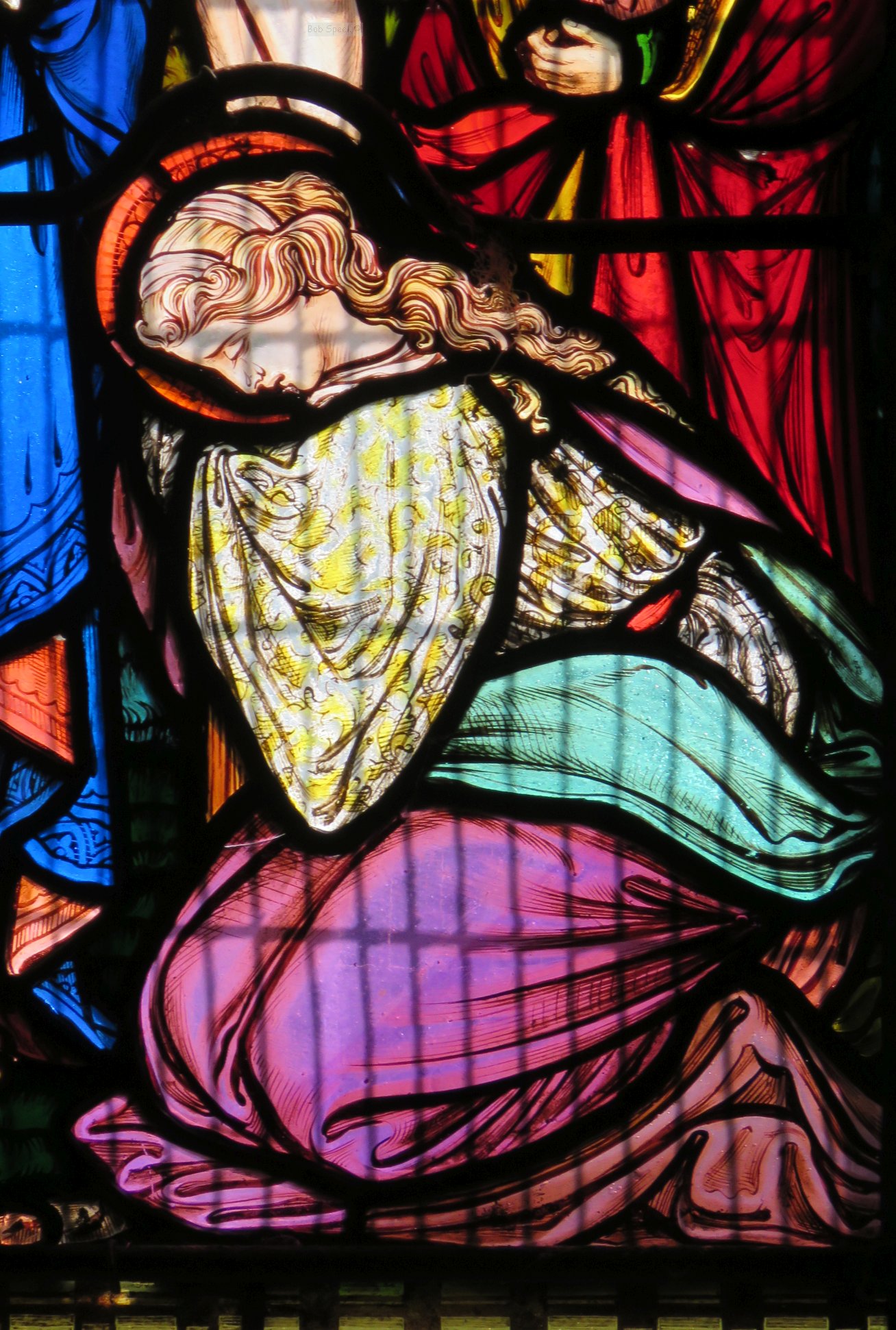
And also from then, most of the stained glass, including that set into the 15th Century East Window.
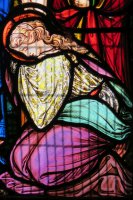
A small statue of the Virgin, painted, looking like something Ewan Christian might have mistakenly deposited.
A cabinet with old pictures of the Church and Bibles.
Modern pictures - a Madonna and Child and the triptych above the alter, by Cherie Rush, d.2004. Brightly coloured, and wanting a century or so of grime to darken them down.


Outside:
The graveyard, partly cleared, retains a few larger 19th Century memorials, and by the wall is a War Memorial cross (see picture at top of page).
Winslow village is a small and rather decorative place with various older buildings, much restored, and I must mention one 1889 building with panels with low relief sculpture including strapwork and medieval-style grotesques, really rather good work of its kind.
St Laurence's website is at https://winslowbenefice.org.uk/winslow.